Proportional Measuring Tools on a Workbench
...Preserving the fire.

I once read that a good children’s book can be more difficult to write than a novel. On the surface that seems absurd. Yet, a child’s book must convey a story within a small package, each sentence carefully crafted to capture the imagination of a young boy or girl. 

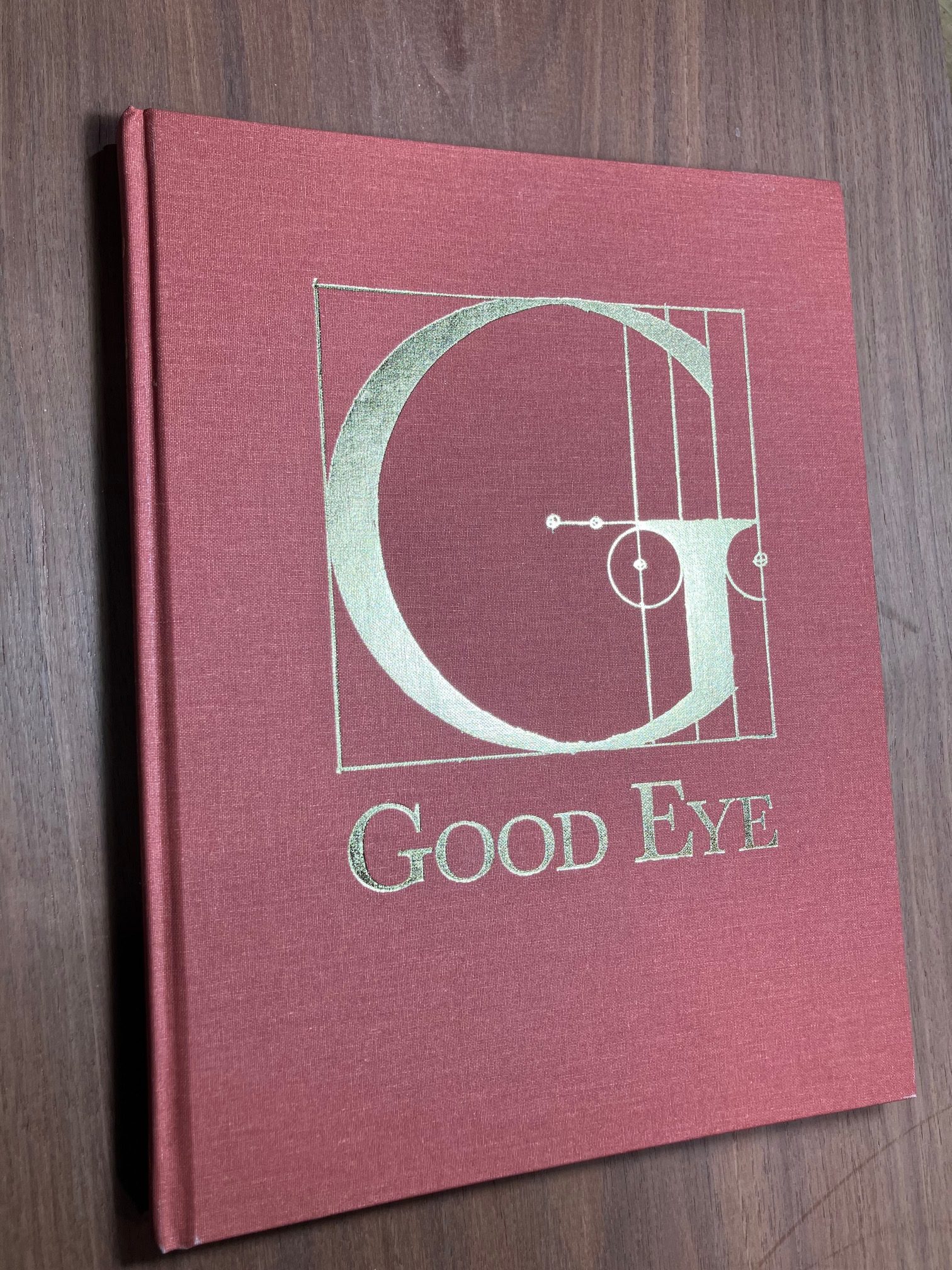
Our latest book “Good Eye” has some of those same qualities found in a good children’s book. It’s not some monumental tome explaining furniture design in exhaustive detail. Instead, the text is compact, letting illustrations carry much of the load. The real storyteller in this book is not Jim or George, or even the old historical books we’ve used in the past. Actually, the real storytellers are the survivors. Old furniture pieces, beloved for their beauty and usefulness, filled with lessons to pass onto a new generation of artisans. Like an old song reworked to be sung for a new audience in a new time. 

Good Eye is a deep look into a number of iconic furniture forms, searching for timeless design lessons. Its focus is not the parts that spoke to the fashion of the day, but to those qualities that have an appeal across time and across cultures. Here’s the best part. Good Eye can also help you to see and hear the stories woven into furniture and buildings in your world. You won’t be able to unsee it. 

Good Eye is available through Lost Art Press or directly through our website.

A gift from Bonner to a budding woodworker

On this this July 4th holiday I’m re-posting this tribute to a woodworker and mentor, Bonner Hall.

Bonner Hall stooped down and flicked a Japanese beetle off the barely open rose blossom. He paused to relish the fragrance and take in the beauty unfolding before him. Bonner was sixty years my senior, quiet, spent most of his time putzing in his rose garden and cleaning freshly caught bluegills, his wrinkled hands now struggling to keep a knife blade steady. He was a hobbyist woodworker with a tiny shop tucked away in his basement lined with baby food jars nailed to the rafters filled with screws and tacks. He had an assortment of 1950’s vintage Sears power tools. All underpowered and wobbly by today’s standards, but somehow he managed to turn out some beautiful furniture pieces. I remember the first time I stood in his shop in the early 1980’s. He was finishing up a doll bed for a very lucky great grand daughter. “Doll bed” is such a poor way to describe it. More like a wonderful miniature with a piece of nicely figured walnut highlighting the graceful headboard. Like that rose blossom, one of those pieces that begged you to pause for a closer look. Bonner took note that I at least had eye enough to appreciate it, and that moment somehow bridged the gap between our ages.

On the wall above his workbench almost hidden amongst the collection of chisels and workshop flotsam was a small framed portrait. A pastel sketch of a young army officer with ruddy cheeks, a strong jaw and penetrating blue eyes.  Bonner tapped his pipe against the edge of his workbench and didn’t look up as he said,

“That was me in Paris on leave, right after the battle of the Argonne Forrest in 1918, hard to believe I was ever that young?”

Like most veterans he had few words to share about what he endured in the Meuse- Argonne offensive that claimed  thousands of  American soldiers, other than it was rough. He changed the subject by pulling down an old wooden bench plane from a cubbyhole and began loading me up with a box of hand tools and a small bundle of walnut cutoffs.

Bonner’s generosity is one that I know so well amongst woodworkers. Passing along tools, wood, and freely sharing hard won knowledge. But Bonner passed on something more. Apart from being a fine example of a man, he unashamedly brought his love for the things he cherished into the furniture he created. It makes no sense to put so much labor into a rose that can only be appreciated for a moment, or a doll bed that may not be appreciated by a child until Bonner was long gone. Yet he had other reasons to squeeze life out of every moment – 14,000 of them buried in the fields of eastern France. It’s somehow fitting that when Bonner’s heart finally gave out, he crumpled to the ground out in his beloved rose garden. We should all be so lucky.

George R. Walker

Old-school method for calculating linear ratios such as board footage. This particular example is from “Deane’s Doctrine of Naval Architecture” published in 1670. See the store page to download a free PDF that explains the process.

Geometry is a mysterious bird. The ancient geometers thought it mysterious because its secrets were like jewels that fell from the heavens. Though it’s the earliest form of mathematics, it doesn’t rely on numbers. In its purest form, geometry was expressed using points, lines, and elemental shapes such as the circle and the square to prove a geometric truth.

On a practical level, builders used geometry to determine if something is true. In other words, is that wall plumb, is that foundation level etc. That’s a far cry from today, where everything is described with numbers from your shoe size to the calories on that bag of chips you shouldn’t be eating. 

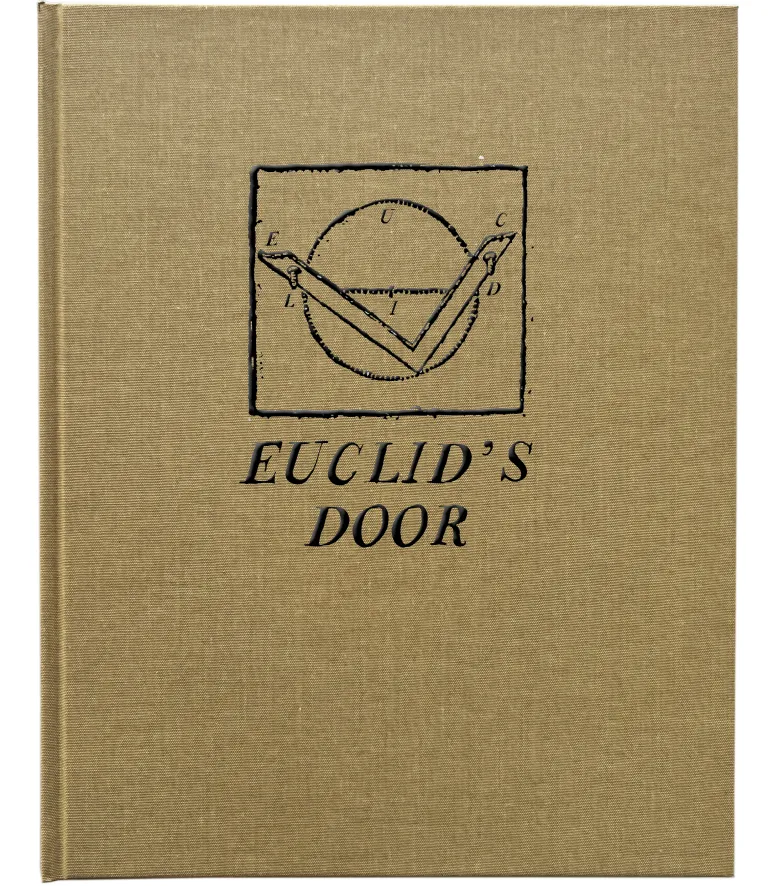
Our new book “Euclid’s Door”, describes how to build a kit of layout tools and in the process unlock the hidden geometry. Early on, we were curious to explore just how true we could make these tools using hand methods and the power of geometry. I confess, I reached into my machinist tools to quantify the results of our efforts. That became a big “aha” moment. We discovered we could indeed make wooden tools that stand up well and even exceed their modern metal cousins. How could this be possible? 

Here’s a simple but important principle. If you magnify the distance of the thing you are trying to measure, it increases your ability to gauge with precision. Using winding sticks is a good example of this in action.

The length of the sticks exaggerate the width of the board to magnify any twist. Another example is to draw two parallel lines. You can prove they are indeed parallel if you extend the lines out and they never cross. For our purposes on the tool builds we found we could achieve magnificent results extending lines out with our three foot long wooden straight edge. We used this principle to work out a simple proof for every tool.

We check a square by tracing a line and then flipping it. By extending the blade with a straightedge we can dial it in to a high level of true.

 Here’s a couple of other examples of that principle that illustrates the power of it. Take a machinist’s micrometer. It’s really just a screw that has a scale we can read to help us measure with precision. Yet it is able to perform at a high level because it mechanically exaggerates the distance of what it’s measuring.  One turn of the thimble (the part that has the scale on it) advances the plunger (the part that touches the work) 0.025”. It takes forty revolutions to advance the plunger one inch.

Yet in those forty turns, the thimble travels round and round the barrel of the micrometer and in reality it travels a distance of about six inches. So the travel ratio is about 6:1. Another good example is a tall case clock. It uses weights to drive the hands, but the precision is controlled by the motion of a pendulum. In one hour, the tip of the minute hand on a dial traces a circle that’s a bit over 30 inches in circumference. In that same hour the pendulum below swings out the beat of 3,600 seconds.

In that same space of one hour, that pendulum travels over half a mile. Most clocks have a screw mechanism to raise or lower the pendulum bob. In this way, the pendulum swing can be altered slightly. This allows the clock to be adjusted with great precision. 

Humor me and let me take you down a rabbit hole. Most of the things we typically measure are expressed with a number i.e. inches, pounds, minutes, etc. These measurements that are expressed as a number all require a “master” or standard. In my former life in industry we kept and maintained masters that we used to make sure the tools and product were correct. These masters were all checked ultimately against a set of “Grand Masters’ in a vault. Those Grand Masters were sent to the Bureau of Standards in Washington D.C. once a year to verify they were correct.

The infrastructure to support a numbers based system is massive

Not sure what the technology is today, but even back in the 1970’s, the D. C. lab checked our Grand masters against a beam of light with a wavelength that defined ground zero. In the case of measuring time, early clock makers had to turn to the heavens for a suitable time master. Note, they were looking to something at great distances to get their master time. Every major seaport across the globe went to great expense to set up and maintain a master clock that naval navigators could set their timepieces to. In both these cases the process of developing and improving a master to support the entire enterprise required tremendous resources. 

Compare that to this simple geometry our ancestors discovered. It doesn’t use numbers to measure but instead uses lines to verify if something is true i.e. are the lines parallel or do they intersect in the right spot. It put tremendous power into the hands of ancient builders that only required a few bits of string and a couple of straight sticks (which are self proving). Put that in your pipe and smoke it. 

My Mother-in-law loved to watch TV shows about aliens and UFOs. She also thought you could fix anything with duct tape, even a leaky water line. It always amazed me how an eighty year old lady could squeeze under her kitchen sink and mummify a leaking pipe with a big old roll of gray tape. Then a week or two later I’d get the call to sort out the soggy goo and put it right.

But back to aliens. She was convinced that the pyramids could only have been built by someone with superpowers from outer space. In her defense, she was right about something. The ancient builders who designed and executed those amazing structures did have superpowers. They mastered the power of geometry. Ironically, those ancient geometers also thought that this knowledge fell from the heavens. They might not have used those exact words but they did consider it a great mystery. Then as now, no one fully understands the mystery of geometry. At least no one knows exactly how our ancestors came to comprehend it and master it. Yet it became, and still is the foundation of the building arts. 

Jim Tolpin and I have been exploring what we call “Artisan Geometry” for the last ten years. Along the way we noted something odd when we looked inside old historic tool chests. You could take all the tools and divide them into two groups. One group, like saws or chisels, were mostly acquired from specialty tool makers. A second group like squares and straight edges were often user made. This second group piqued our curiosity. They’re mostly used for design and layout and all have a strong link to artisan geometry. So we jumped down the rabbit hole and built our own kit of tools. We built several different versions of these tools and unpacked the geometry inside each one. 

Detailed instructions on how to build these tools is in this book

Besides being astounded at how functional and accurate the tools are, we came to see that each build offered a concrete hands on lesson in geometry. We think that building these tools was a door into the mysteries of artisan geometry. An important passage to cross through if you are a builder.

Euclid’s Door is now available for sale from Lost Art Press or you can purchase a copy from our website. It’s one sure way to rev up your superpowers.

George R. Walker

Would it surprise you to learn that an ordinary try square can take you to places far beyond simple rectangular boxes? In fact, learning how to unlock the power of a right angle can unpack a whole new world of design. What if I told you a right angle is key to understanding a wide array of irregular forms chuck full of compound angles?

These forms represent a small fraction of non-rectilinear shapes.
These represent a small fraction of non-rectilinear shapes you can unpack with a square.

Or that you could use the power of a right angle to make patterns to construct complex curves? Angels (and woodworkers) may fear to tread into the land of complex shapes and curves, but armed with some knowledge of geometry and a square, you can step outside of your comfort zone. 

Jim Tolpin has just completed a digital workbook titled Sections and Projections. It teaches you how to unpack and draw complex forms and curves to generate working drawings to put flesh on your ideas. He walks you through the geometry behind a progression of forms. Each new form adds a twist that expands a whole new range of creative possibilities.  Not only will you understand the underlying geometry but you’ll understand how to change and adapt it to your design needs. The material is dense but made understandable by the excellent drawings of Keith Mitchell from Shipwrightskills

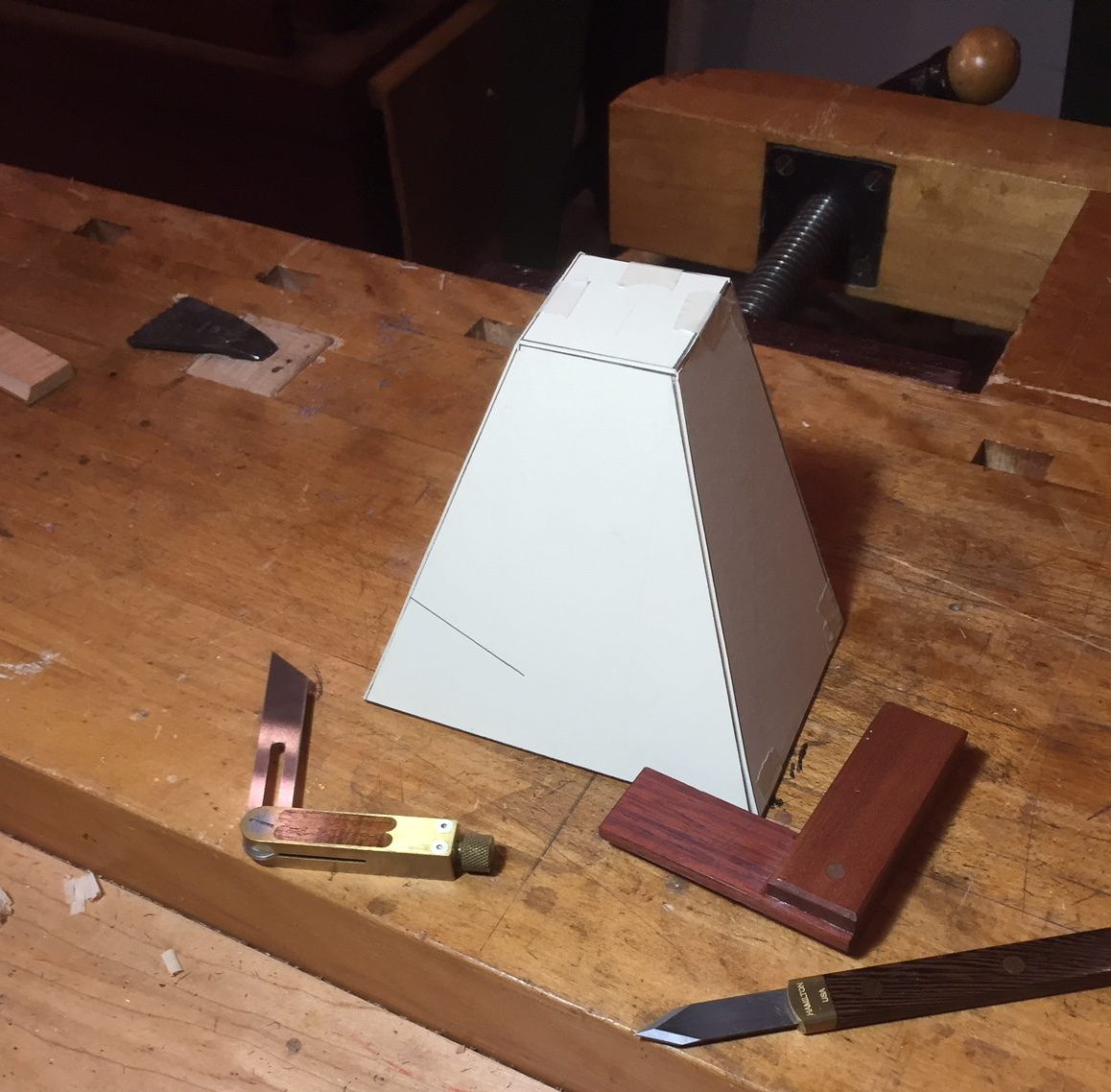
If you are serious about taking your designs to a new place, check out Sections and Projections. Note, you can download the Forward and Introduction for free to get a taste for what’s inside along with a set of templates to construct some paper models of complex forms. 

George Walker

2022

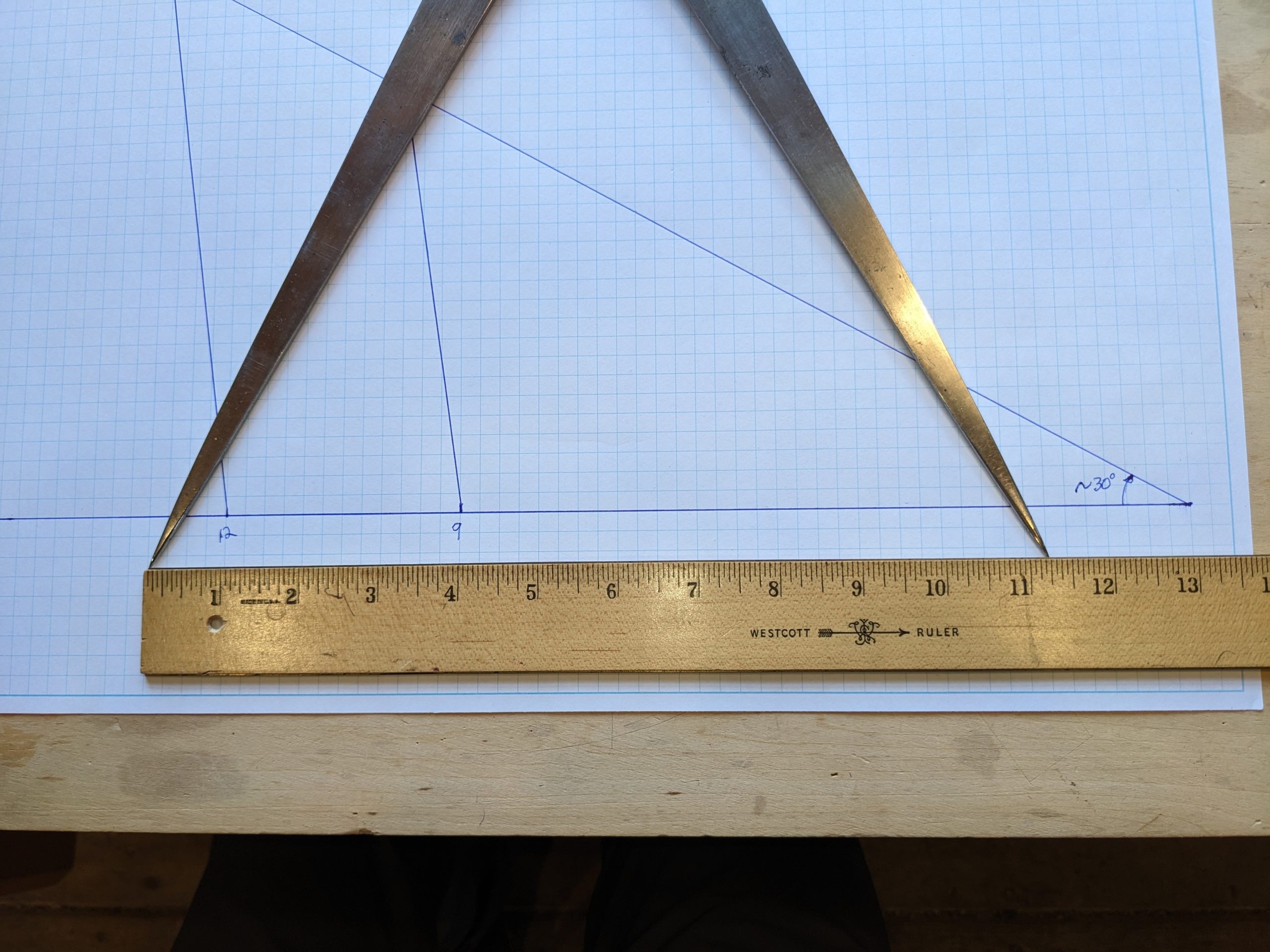
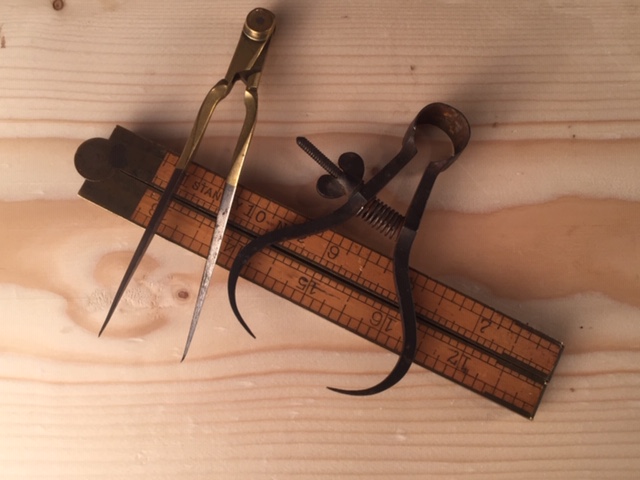
This is a bit more detail from an Instagram post I published about dividers. In some trades, especially carpentry work, dividers were sized to provide a quick job site reference. The overall length when the dividers were closed could double as a handy way to step off common distances. Case in point is these two early blacksmith made dividers. The example on top is exactly 24″ long, the same length as the long leg of a carpenters square.

Note the square pictured is also hand made and numbers are hand stamped.

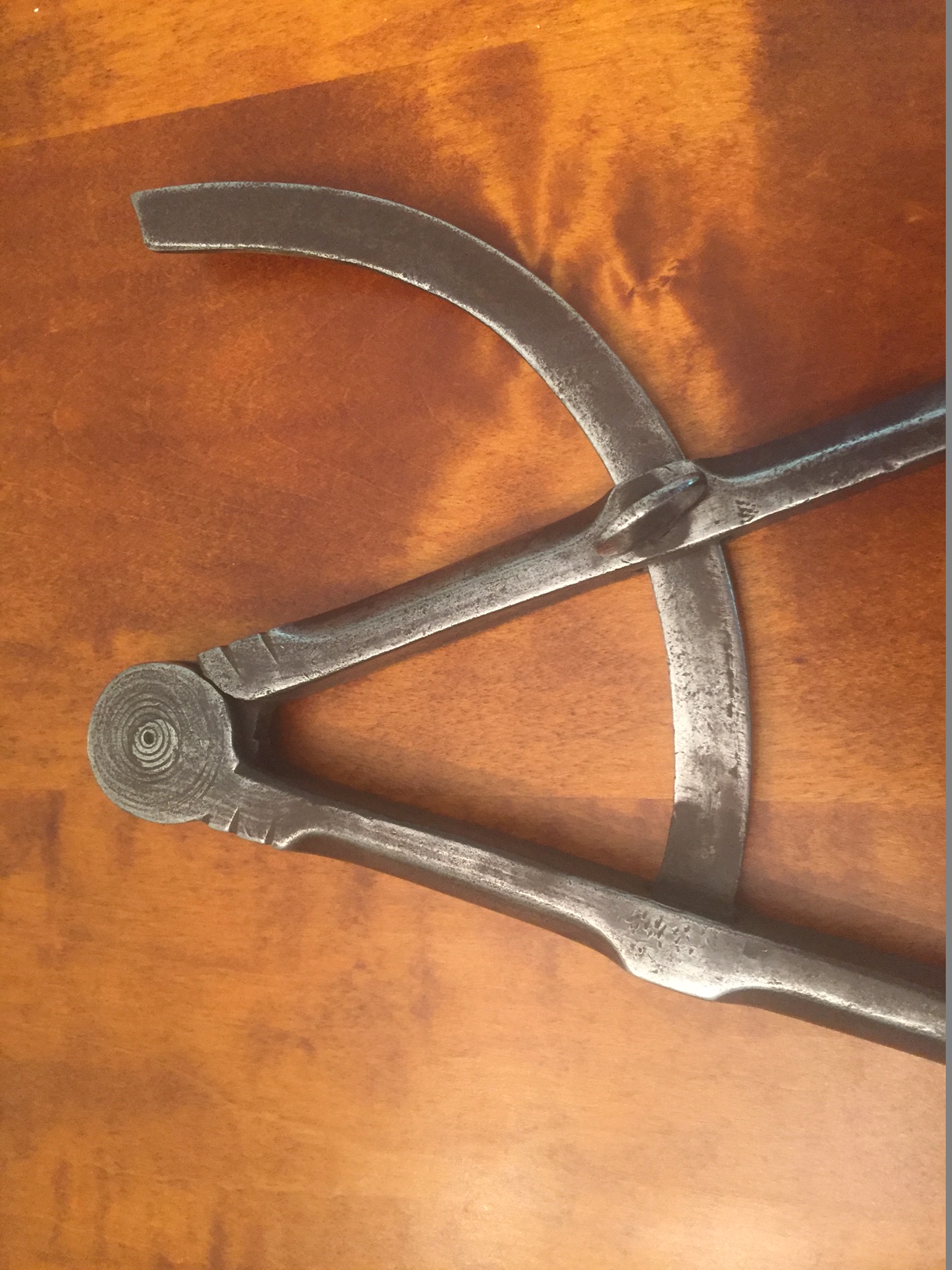
The smaller pair is a bit more mysterious. There’s a punch mark in the center of the fulcrum and the distance from the mark and the end of the legs is 16&1/2″. What’s that about? That’s actually a very important measurement to a pre-industrial artisan. That distance is exactly 1/12 of a “Rod”. A rod, also known as a perch or a pole was a standard distance used to step off longer distances before the invention of tape measures. A rod is 16 feet 6 inches long. Although that seems like an odd module to use as a standard, a 16&1/2 foot rod multiplied produced spans that were common on buildings from barns to cathedrals. For example, two rods equals 33 feet. Simple fractions of a rod like 2/3 of a rod is 11 feet. Using whole rods and simple fractions, you can step off the following distances – 11, 22, 33, 44, 55, 66, 77, 88, and 99 feet. All of these distances show up routinely in historic building foundations. Thus the divider above could be used along with a rod to step off a distance quickly and accurately. 55 feet is 3 rods plus 1/3 or four steps using our built in divider reference.

I had a few folks request more details on this particular tool, Here are some close ups

You can see the reference mark clearly.

Note the grain of the wrought iron. I also wonder if the circles around the center are some sort of small scale reference or just some decoration. Any guesses how the maker would have made these rings? Yes, I know they look like they are made with another pair of dividers, but this is metal, not butter.

I’m not a smith but to my eye it looks like the legs start out square in cross section and are then forged into a tapered triangle shape except the section where the locking screw is located.

Detail of tip
Detail of locking screw

A couple of other thoughts. How much skill is required at the anvil to get these two tapered legs exactly the correct length? Along with all the other things that have to come together. From my perspective, this is much more sophisticated than it might appear. What stories could this tool tell? Who used it? What buildings did it leave it’s mark? More questions than answers.

George Walker

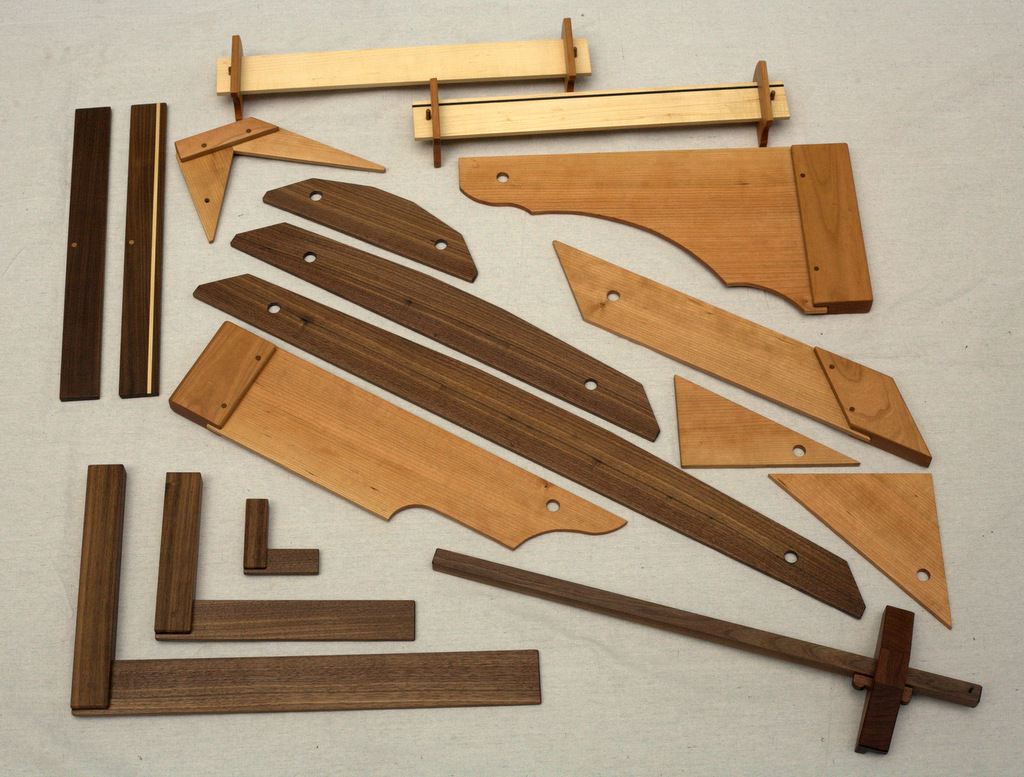
Our book Euclid’s Door went off to the printer this week. It’s a step by step guide to building a set of layout and design tools that were commonly user made in pre-industrial tool kits. Jim and I wondered why artisans usually bought many of their tools like saws and chisels, yet they made their own kit of layout tools. Those questions vanished when we built some of these tools for our workshops. These deceptively simple wooden layout tools are actually sophisticated and highly evolved. These tools were perfectly suited to building furniture. Also we quickly realized that the tool builds themselves, offered a deeper insight into what we like to call Artisan Geometry. Basically a working knowledge of simple shapes, lines, and angles. Geometry is the workhorse, the structure, that under girds the craft. The lessons learned in building a straight edge or square is more than just head knowledge but deeper. Sort of like riding a bike. Not something that simple to explain but once learned, it sticks.

Part of this knowledge is technical. Learning to use a hand plane and shooting board to dial in the parts to a high level of perfection. The other part is more mysterious. How to use geometry to create each tool out of thin air using just a compass and a straight edge. Note – our first build is a straight edge that we use to boot strap every other tool into existence.

Euclid’s Door is a mini apprenticeship to hone you skills. Plus you end up with a killer set of of layout tools. One thought that kept dogging me as I walked through the builds. Why didn’t I learn this years ago?

We don’t have a solid release date yet due to supply chain issues, but you can sign up to be notified once it’s available at Lost Art Press.

George R. Walker

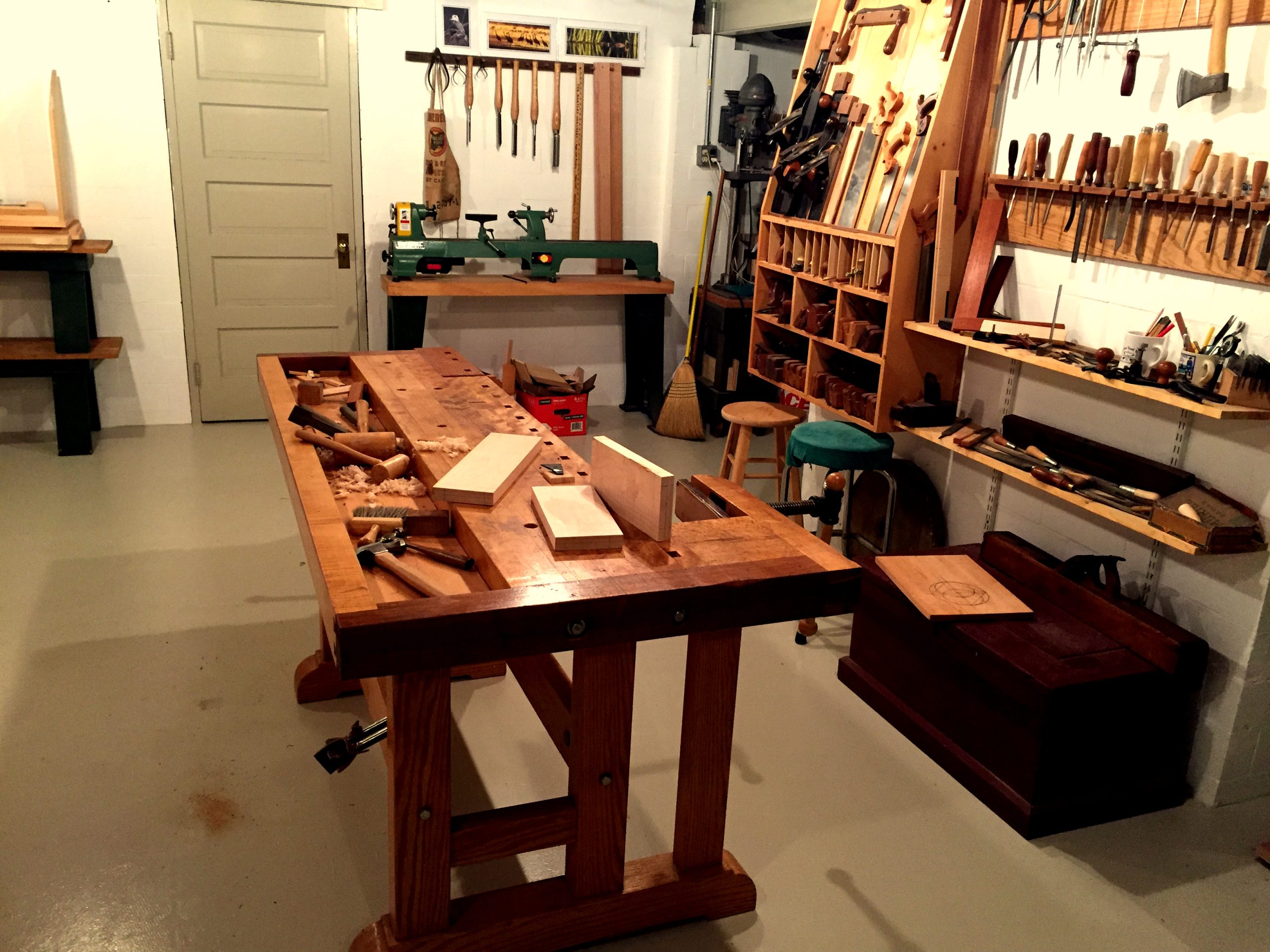
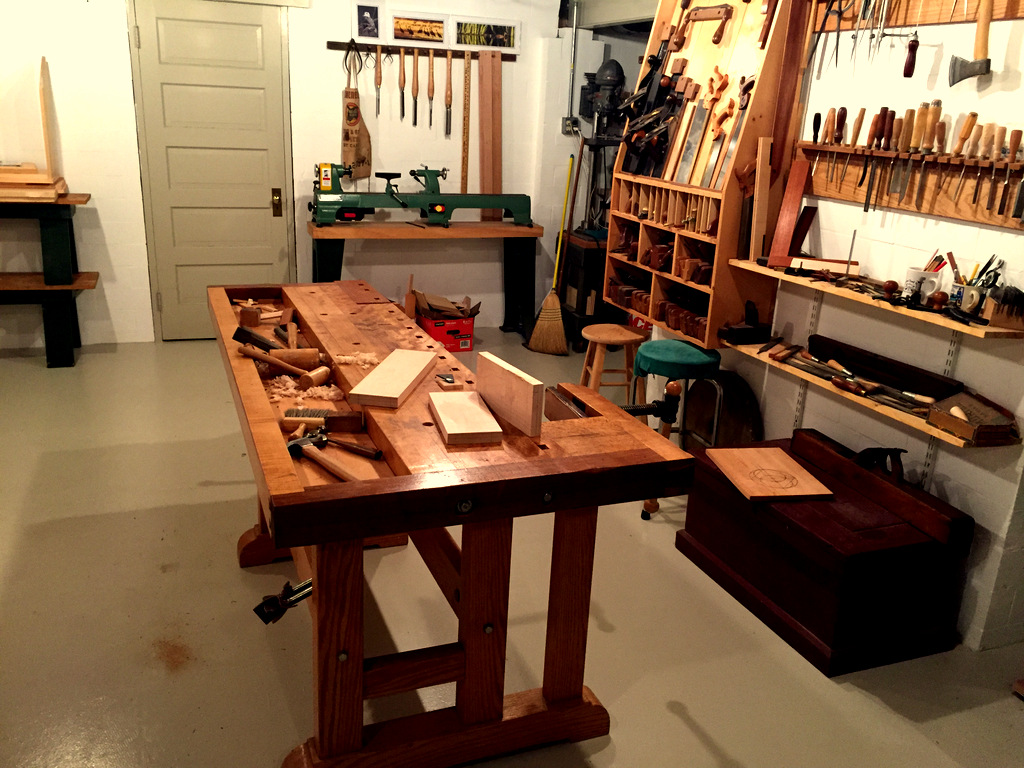
Over at the Lost Art Press Blog, Chris Schwarz made a series of short videos about the pros and cons of the workbenches in his shop. It’s a wealth of workbench wisdom for anyone intent on building or upgrading their bench. I have to admit, it brought to mind the shortcomings in my own bench. It’s a German style bench with a shoulder vise I built about twenty years ago. This is the first serious bench I built after stumbling about with a couple of horrible workbench attempts. The first one was an old hollow core door with a mechanics vise bolted to it. Basically a big shelf and about as sturdy as a folding card table. Then I cobbled together a bench out of construction timbers and made a face vise using the fork tubes from a 1977 Honda 750 I wrecked on a curvy gravel road. That bench and vise was pretty much a wreck also. Then I got serious and built my present bench. It made a world of difference in my work and the build itself improved my joinery skills. Yet when I look at it after watching the workbench reviews, some glaring faults stick out. It has a tool tray which does turn the workbench into one big junk drawer. Reminds me of the gutter in the dairy barn that cows crap in and needs mucking out constantly. The work surface is only 14 inches deep and too narrow for much of what I need. Worst of all it’s not flat. I know this is blasphemy, but it’s true. There’s sort of a “flattish” zone where most of my work takes place, but towards the ends where the top is capped with heavy timbers it’s a bumpy road. Yet, in spite of this glaring fault, I’m able to process boards that are flat and true with ease. Come to think of it, most of the workbenches I’ve seen in the wild are anything but flat. Often worn so badly they look like the dished out stone steps at the old post office. How does one get flat and true boards using a less than true workbench? How do I make a silk purse from a Sow’s ear? The answer is geometry and the often overlooked tool, the wooden straight edge and winding sticks. These user made tools help me get a true picture of the surface I’m truing up regardless of the faults in the bench. Would I like a Benchrafted split top Roubo with a criss cross vise? You Betcha! Until that happy day comes, I’ll continue to make silk purses with the aid of my handy user made straight edge and winding sticks. If you’d like to make a set for yourself you can purchase a video here on our site to walk you through the process.

These simple user made tools capture the power of geometry.

What follows is Jim Tolpin’s introduction from the PDF on building Gypsy wagons or Caravans. You can purchase the entire document from our shop page.

Why I Create Caravans 

The first answer that comes to mind, which is probably the one closest to the truth, is the opposite of what mountaineers say when asked why they climb a mountain: “Because it’s there”. In my case, I’ve always wanted to build gypsy caravans because they are not there! (At least nowhere near me). I have long been fascinated with the traveling lifestyle, with life lived mostly outdoors, lived close to the edge—A life I lived for a decade or so in my youth. I learned that if you could live such a life in company with a cozy and enchanting conveyance in the form of a highly developed folk craft, then so much the better.  

An encampment of gypsies with caravans by Vincent Van Gogh

For me, that conveyance was the English or Irish gypsy caravan (“Vardo” in the Romany language) as observed and painted by Van Gogh. Ever since having first seen this painting, and later highly romanticized illustrations of them in children’s books (see “Wind in the Willows” for starters) I began finding murky black and white photos of them taken at the end of the 19th century. I finally got my hands on a clutch of glorious color photos of restored versions at Appleby Faire in England as well as some highly detailed drawings by John Thomson. At that point I knew I had to have one. I also knew that the only way I would ever get my hands on one would be to build one.

Starting in the late 1970’s I built, and traveled in, a very simple version affixed to the frame of a 1940 Ford 1-ton pickup.

After moving to the Northwest, I embarked on building more authentically designed and detailed vardos, such as this hardtop version pictured above.

My last caravan was the “Trillium” completed in 2007. This wagon closely reproduced the look of a “bow top” style caravan that was produced by Bill Wright’s carriage shop in Leeds, England in the late 19th century. 

Like most of my other wagons, I built the Trillium in collaboration with several other artists: a metal worker for the welded steel frame and some of the decorative brackets; a graphic artist for the panel art and lining out; and a stained glass maker for the windows. The current owner provided much of the fabric work of the interior decor.

The materials throughout this and all my other wagons (since my first) are marine grade. In general I used Honduras mahogany for the framework (mostly pinned tenon and bridle joints); Port Orford cedar for the tongue and groove siding; Sitka spruce for roof framing; Egyptian canvas sailcloth for the cover; marine grade oil enamel paints and bedding compounds; bronze and stainless steel fasteners and copper rove and rivets. Joinery throughout, including the interior fittings, were built to traditional joiner’s standards. That is, all the joints are mechanically interlocked and therefore don’t rely on glue or fasteners to bear loads.

None of my wagons were designed to be horse-drawn. I don’t know horses, and I don’t know how I would convince the beast to pull my wagon around the highways and byways of America. But I do know how to pull trailers behind my pickup truck, so I built my wagons to be roadworthy at highway speeds. 

Of course, one can use far less expensive materials and still create a lovely caravan–it just will require more conscientious maintenance and even then may not enjoy a lifetime of use.

Whether traveling four or four hundred miles a day these wagons are the conveyances of dreams-come-true. They are a folk-craft of the hand that takes the heart home.

Latest Posts